- Japan Is Not as Difficult as You Think
- The Dashi Problem (And How to Navigate It)
- Where Vegetarian Eating Is Actually Easy
- Regional Differences Matter More Than You'd Expect
- Handling Spontaneous Situations
- Seasonal Eating: A Real Advantage for Plant-Based Travelers
- Reading Supermarket Labels
- Restaurants Worth Knowing About by Type
- Your Action Plan Before You Arrive
Japan Is Not as Difficult as You Think
Plenty of travelers arrive in Japan with the assumption that eating vegetarian or vegan will be a constant battle. The reality is more nuanced than that. Yes, fish-based broth hides in surprising places. Yes, menus rarely use the word “vegan.” But once you understand how Japanese food actually works — and arm yourself with a few smart strategies — eating well without meat or animal products becomes genuinely enjoyable rather than exhausting.
This article focuses on what most travel content glosses over: how to handle real-world situations, from small-town restaurants with no English menus to spontaneous lunch stops when your planned restaurant turns out to be closed. Let’s get into it.
The Dashi Problem (And How to Navigate It)
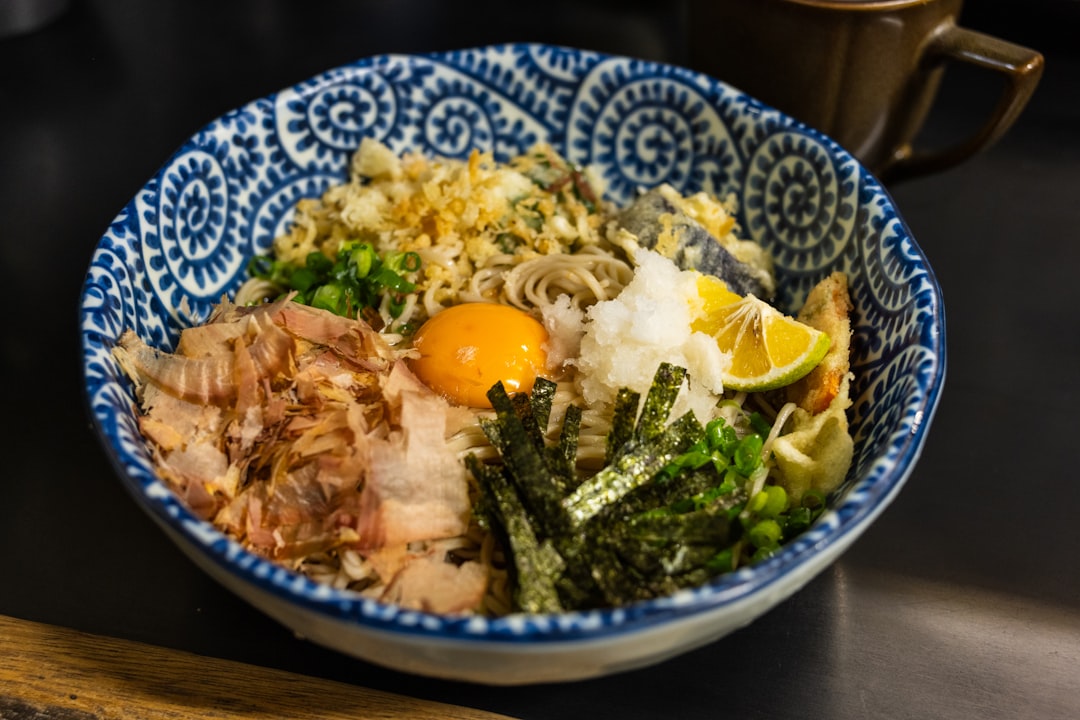
Before anything else, you need to understand dashi. It is the invisible ingredient that catches most vegetarians off guard in Japan. Dashi is a light stock that forms the backbone of Japanese cooking — miso soup, noodle broths, simmered vegetables, salad dressings, and even rice seasonings can all contain it. The most common version is made from katsuobushi (dried bonito flakes) and kombu (kelp). A dish can look completely plant-based on the surface while being built on a fish foundation underneath.
This matters because politely asking “does this contain meat?” will often get a sincere “no” — because technically, fish is not meat in the traditional Japanese understanding of the question. You need to be more specific.
How to Ask the Right Questions
The phrases below will serve you far better than a simple vegetarian declaration at the door:
- “Dashi wa katsuobushi desu ka?” — Is the dashi made from bonito?
- “Konbu dashi dake desu ka?” — Is it only kelp dashi?
- “Tamago wa haitte imasu ka?” — Does it contain egg?
- “Gyunyu wa haitte imasu ka?” — Does it contain milk?
Having these written on a small card — or saved as a note on your phone — means you can hand it to staff without anyone feeling flustered. Japanese service culture values clarity and politeness, so a calm, written request is far more effective than a hurried verbal exchange.
For vegans specifically, carrying a printed card in Japanese explaining your dietary restrictions is genuinely one of the most powerful tools you have. Several websites offer free printable versions — search for “vegan Japanese restaurant card” and keep one in your wallet before you leave home.
Where Vegetarian Eating Is Actually Easy
Buddhist Temple Cuisine: Shojin Ryori
Kyoto is the most well-known destination for shojin ryori, the traditional Buddhist temple cuisine that has been entirely plant-based for over a thousand years. No meat, no fish, no eggs, no dairy — and crucially, no alliums like garlic or onion, which are also avoided in this tradition. The food is seasonal, carefully prepared, and served in elegant lacquerware boxes.
What competitors rarely mention is that shojin ryori is not just a Kyoto thing. Significant temple towns across Japan — Koyasan, Nikko, Kamakura — offer overnight stays at temple lodgings (shukubo) where shojin meals are included. These experiences are deeply authentic and remove all guesswork from your dining situation entirely.
Reservations are essential and usually required in advance, but most temple lodgings have English-language booking options through their websites or platforms like Japanese Guest Houses.
Tofu Specialists and Yudofu
Kyoto is also home to a thriving culture of tofu cuisine. Yudofu — hot tofu simmered simply in kombu broth — is a Kyoto winter staple and completely vegan in its pure form. The Arashiyama and Nanzenji areas have rows of restaurants dedicated to it. Ask about the dashi to confirm, but many establishments here are accustomed to the question and can accommodate clearly.
Convenience Stores: Better Than Their Reputation
Japanese convenience stores (konbini) are genuinely useful for plant-based travelers. Onigiri filled with pickled plum (umeboshi) or kelp (konbu) are often vegan, though you should check for hidden flavoring agents. Plain steamed rice, edamame, roasted nuts, certain fruit cups, and some packaged salads are safe options at most Lawson, FamilyMart, and 7-Eleven locations.
The snack aisle is where seasonal options shine — roasted sweet potatoes, chestnut-flavored sweets, and various rice crackers (check ingredients) give plant-based travelers satisfying snack options that rotate throughout the year without needing a specialist restaurant.
Regional Differences Matter More Than You’d Expect
Most vegetarian travel content focuses on Tokyo and Kyoto, then stops. But Japan is a long, varied country, and your experience will differ significantly depending on where you travel.
Major Cities
Tokyo, Osaka, Kyoto, and Fukuoka all have a meaningful number of dedicated vegetarian and vegan restaurants. The HappyCow app is legitimately useful here — filter by city, choose “vegan” or “vegetarian,” and you will find enough options to fill a week without repeating yourself. These cities also have Indian restaurants, Ethiopian spots, and Middle Eastern eateries that are naturally accommodating.
Mid-Sized Cities
Cities like Kanazawa, Hiroshima, Matsumoto, and Sendai sit in an interesting middle ground. Dedicated vegan restaurants are fewer, but natural food cafes (often called “macrobiotic” or “natural food” cafes in Japanese) have grown steadily in these cities. Search Japanese Google Maps for 「自然食カフェ」 (shizen shoku cafe) or 「マクロビ」 (macrobi) plus the city name — this often surfaces hidden gems that never appear on English-language apps.
Rural Areas and Small Towns
This is where you need a different mindset entirely. Rural Japan runs on traditional home cooking, and fish and meat are deeply embedded in daily meals. Restaurants may have limited menus with no obvious plant-based options. Rather than seeing this as a problem, treat it as an opportunity to eat strategically.
Supermarkets in rural towns stock tofu, natto (fermented soybeans), pickled vegetables, rice, miso, and seasonal produce in abundance. A simple self-catered meal of rice, tofu, and pickles assembled from a rural supermarket is cheap, delicious, and deeply Japanese. If your accommodation has a kitchen or kitchenette — common in guesthouses and minshuku — this becomes even easier.
At restaurants in rural areas, soba (buckwheat noodles) with simple vegetable toppings or plain rice dishes are often the safest choices. Zaru soba — cold soba served on a bamboo tray with a dipping sauce — is worth asking about, as some versions use only kombu dashi for the sauce.
Handling Spontaneous Situations
Every carefully planned itinerary eventually meets reality. The restaurant you researched is closed for a private event. The recommended spot has a queue too long to justify. You are hungry now, in an unfamiliar neighborhood, with no backup plan.
Here is a practical framework for these moments:
- Find a konbini first. Every neighborhood in Japan has one within walking distance. Pick up something safe while you regroup and search for alternatives without pressure.
- Look for Indian or Southeast Asian restaurants. These cuisines naturally include plant-based options and staff are often more familiar with dietary restrictions from vegetarian customers in their home countries.
- Check for a supermarket deli section. Larger Japanese supermarkets have prepared food sections (called sozai) with vegetable tempura, inari sushi (sweet tofu pouches filled with rice — often vegan), and pickled vegetable sets. Not every item will be suitable, but several usually are.
- Noodle shops as a fallback. Ask for zaru soba or plain udon with no toppings, and request kombu dashi only. It is a simple, filling meal that many noodle shops can accommodate with minimal fuss.
Seasonal Eating: A Real Advantage for Plant-Based Travelers
Japanese cuisine is obsessed with seasonality in a way that genuinely benefits vegetarians and vegans. The concept of shun — the peak season for an ingredient — drives menus across the country. This means that whatever time of year you visit, fresh, carefully prepared vegetables are likely to be the star of at least some dishes.
Spring brings bamboo shoots, mountain vegetables (sansai), and fresh wasabi. Summer sees edamame, corn, and an enormous variety of cucumbers and eggplant. Autumn is the richest season for plant-based travelers: sweet potatoes, chestnuts, mushrooms (including prized matsutake), and persimmons appear everywhere. Winter offers daikon radishes, napa cabbage, and warming root vegetable dishes.
At restaurants with seasonal menus — even traditional Japanese ones — asking “what vegetables are in season right now?” (“Ima no kisetsu no yasai wa nani desu ka?”) opens a conversation that can lead to a kitchen being more creative and accommodating than the printed menu suggests.
Reading Supermarket Labels
For those doing any self-catering, understanding Japanese food labels is enormously helpful. A few things to know:
- Allergen labeling in Japan mandates disclosure of eggs (卵), milk (乳), wheat (小麦), and several other common allergens. These appear in a standardized box on packaged food. Scanning for 卵 and 乳 quickly tells you whether a product contains egg or dairy.
- Fish ingredients appear under various names: かつお (bonito), いわし (sardine), あじ (mackerel), だし (stock — check what type). If you see 植物性 (shokubutsusei — plant-based) on a label, it is a positive sign, though still worth checking the full ingredient list.
- The word ビーガン (biigan — vegan) is appearing more often on packaged products, though not universally. Do not rely on it being there; rely on your ability to read the key kanji above instead.
- Miso paste labeled だし入り (dashi-iri) contains added dashi — often fish-based. Look for miso without this label, or specifically labeled 昆布だし (kombu dashi) for a vegan version.
Restaurants Worth Knowing About by Type
Izakayas With Flexible Menus
Japanese pub-style restaurants (izakayas) often have surprisingly large vegetable-forward options: edamame, agedashi tofu (check the sauce), grilled corn, pickled vegetable plates, and steamed rice. They are not vegetarian restaurants, but a group dining situation at an izakaya is often more manageable than a ramen shop or yakitori grill where meat and fish dominate every item.
Ramen: Know Your Options
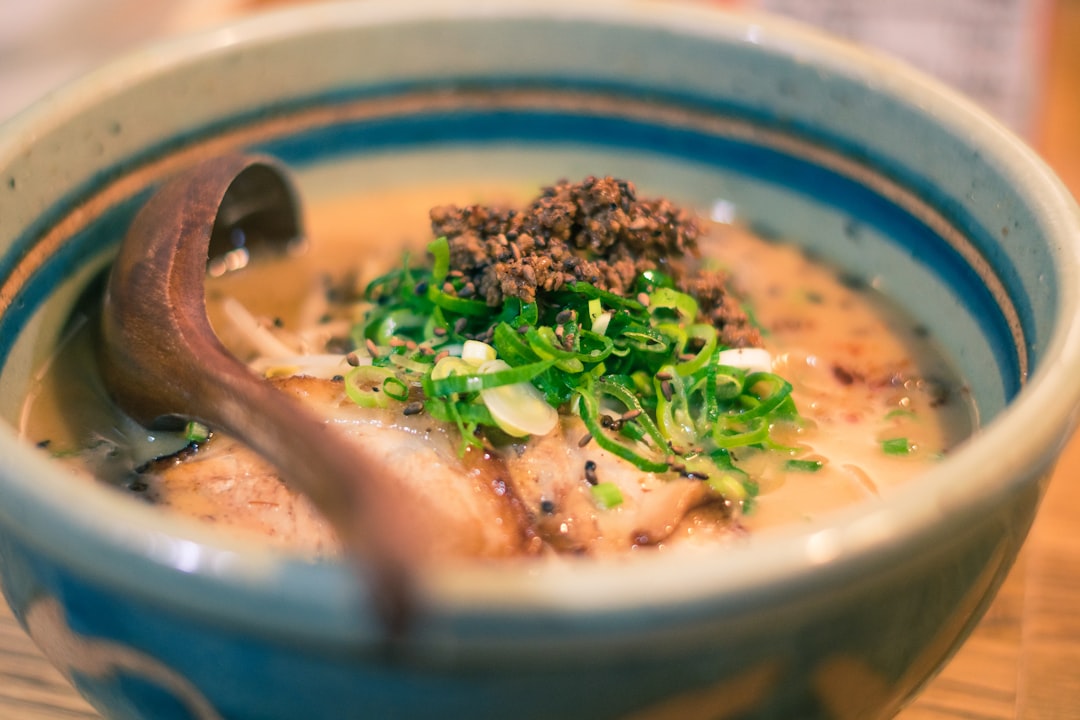
Ramen is one of the trickier categories. Most broths are pork, chicken, or fish-based. However, dedicated vegan ramen restaurants have emerged in larger cities — often labeled ヴィーガンラーメン. Some shio (salt) ramen shops use kombu broth and can accommodate requests. It is worth researching specific shops in each city rather than hoping a random ramen shop will work.
Ethiopian and South Asian Restaurants
Worth repeating: Indian, Nepalese, and Ethiopian restaurants in Japan frequently offer fully plant-based dishes as a natural part of their menus. Dal, chana masala, injera with vegetable stews — these are genuinely satisfying, affordable, and require almost no navigation. Every major Japanese city has a cluster of these restaurants.
Your Action Plan Before You Arrive
- Print or save a vegan card in Japanese before leaving home. Keep it in your wallet and on your phone.
- Download HappyCow and pre-save restaurants in each city you plan to visit — including two or three backups per location.
- Learn the key kanji: 卵 (egg), 乳 (dairy), だし (stock), 植物性 (plant-based). These four alone will help you read labels and menus faster.
- Book at least one shojin ryori meal in advance — whether at a temple in Kyoto, a shukubo on Koyasan, or a dedicated restaurant. It is a meal you will remember for years.
- Search Japanese Google Maps for 自然食カフェ and マクロビ in the cities on your itinerary — you will often find excellent spots that never appear on English-language platforms.
- Plan one supermarket visit per city as a deliberate activity, not a fallback. Exploring the tofu section, the pickles aisle, and the prepared foods counter is itself a window into Japanese food culture.
Japan rewards travelers who approach it with curiosity rather than anxiety. The same applies to eating here as a vegetarian or vegan — the more you understand the food system, the easier it becomes to navigate gracefully. You will eat well. You will probably discover ingredients and preparations you have never encountered before. And you will leave with a much deeper appreciation of just how vegetable-rich Japanese cuisine actually is when you know where to look.