- The Map Everyone Uses Is Missing Half the Country
- Kanazawa: The City That Keeps Getting Overlooked
- Beppu: Hot Springs With Actual Character
- Tono: Where Japanese Folklore Comes From
- Naoshima: Art in the Middle of the Sea
- Shimane Prefecture: The Coast That Tourism Forgot
- Visiting These Places Without Causing Problems
- Your Next Steps
The Map Everyone Uses Is Missing Half the Country
Most visitors to Japan follow the same well-worn path: land in Tokyo, bullet train to Kyoto, day trip to Nara, maybe squeeze in Osaka. It is a perfectly fine itinerary. But Japan has dozens of towns, coastal villages, mountain valleys, and old castle cities that see a fraction of the crowds — and frankly, offer experiences just as rich, sometimes richer.
The challenge is not that these places are hard to love. The challenge is that they are hard to find if you only know where to start looking. This article gives you that starting point, along with honest advice on getting there, what things cost, and how to visit without overwhelming small communities that are not built for mass tourism.
Kanazawa: The City That Keeps Getting Overlooked
Kanazawa sits on the Sea of Japan coast, about two and a half hours from Tokyo by bullet train, and it genuinely baffles travel writers that it remains so undervisited. The city was one of Japan’s wealthiest feudal domains and escaped wartime bombing, which means the old districts — samurai quarters, geisha neighborhoods, a famous garden — are not reconstructions. They are the real thing.
What to do there
- Kenroku-en Garden: Considered one of Japan’s three great gardens. Go early morning on a weekday and you will sometimes have entire sections nearly to yourself.
- Higashi Chaya District: A preserved geisha entertainment district with wooden ochaya teahouses lining narrow streets. Some are open to visitors for matcha and sweets.
- Omicho Market: A covered market selling fresh seafood from the Japan Sea. This is where locals shop. Grab a bowl of crab rice or fresh sashimi from one of the stalls upstairs.
- 21st Century Museum of Contemporary Art: One of Japan’s most thoughtfully designed museums, and surprisingly accessible for non-art-specialists.
Getting there and budget reality
The Hokuriku Shinkansen connects Tokyo to Kanazawa directly. A one-way unreserved seat is roughly 13,000 to 14,000 yen depending on the service. If you have a Japan Rail Pass, the shinkansen is covered. Budget accommodation in Kanazawa runs from 4,000 yen per night in guesthouses to around 15,000 yen for a decent mid-range hotel. The city is small enough that many attractions are walkable or reachable by the Kanazawa Loop Bus, which costs 200 yen per ride.
Beppu: Hot Springs With Actual Character
Most visitors who want onsen head to Hakone near Tokyo because it is convenient. Beppu, on the southern island of Kyushu, is another level entirely. The city produces more hot spring water than almost anywhere else on Earth, and it has a slightly quirky, old-resort-town atmosphere that feels nothing like tourist-polished Japan.
What makes it different
Beppu has public bathhouses — called hyotan onsen or neighborhood sento — where locals actually bathe. Entrance to a public bath typically costs between 100 and 500 yen. You are not paying for a luxury spa experience; you are paying to do what people here do every day. That is the whole point.
The famous Jigoku Meguri (Hell Tour) visits seven geothermal pools with dramatic colors — cobalt blue, blood red, grey mud — that are too hot to bathe in but extraordinary to look at. A combined ticket covering all seven hells costs around 2,000 yen.
Getting there
From Fukuoka (Hakata Station), Beppu is about two hours by limited express train. From Tokyo, a flight to Oita Airport followed by a short bus ride is the most practical option. Beppu is not on the standard bullet train network, which is partly why it stays quieter. Accommodation ranges from simple guesthouses near the station to traditional ryokan with private baths attached to the room, which can run anywhere from 8,000 to 30,000 yen per night depending on meals included.
Tono: Where Japanese Folklore Comes From
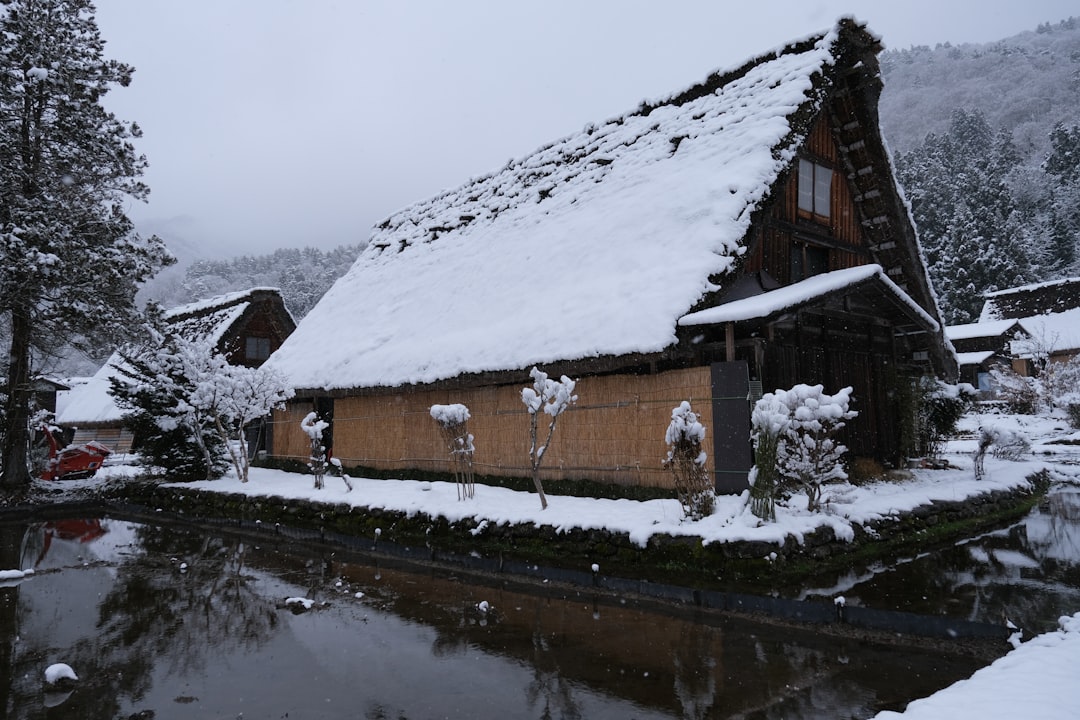
In the mountains of Iwate Prefecture in northern Honshu, there is a small farming valley called Tono that most international visitors have never heard of. In Japan, however, Tono is famous — it is the spiritual home of Japanese folk legends, the place where stories of kappa (river creatures), zashiki warashi (household spirits), and other supernatural beings were first written down in a collection called the Tono Monogatari.
The countryside around Tono looks like it belongs to another century. You will find old L-shaped farmhouses called magariya that historically kept horses in one wing and the family in the other, mossy shrines at the edges of rice paddies, and rivers where people still leave offerings for the kappa. It sounds eccentric. Standing in it, it feels genuinely ancient.
Practical notes for Tono
Tono is reached by local train from Hanamaki (itself accessible by shinkansen from Tokyo in about two hours and forty minutes). The local train to Tono takes another hour. Once there, you really need a bicycle or rental car to explore properly — the highlights are spread across the valley. Bicycle rental near the station costs around 500 to 1,000 yen per day. There are a handful of guesthouses and small ryokan; book ahead because capacity is genuinely limited. This is a place to visit responsibly — the communities here are small and not set up for bus tour volumes.
Naoshima: Art in the Middle of the Sea
Naoshima is a small island in the Seto Inland Sea between Honshu and Shikoku. It should be overwhelmed with visitors given what it offers — world-class contemporary art museums built into the landscape by Tadao Ando, outdoor sculptures sitting casually on the beach, and an old village neighbourhood where artists have transformed traditional houses into installations. Somehow it remains genuinely peaceful most of the year.
How it works
The island has several major art museums: Benesse House Museum, Chichu Art Museum (which houses a handful of Monet water lily paintings in a way that will genuinely change how you see them), and the Lee Ufan Museum. A combined ticket covering multiple venues runs around 4,000 to 5,000 yen. The Art House Project in Honmura village charges a separate entry of around 1,050 yen for access to most of the converted houses.
Getting there and seasonal advice
Ferries run to Naoshima from Uno Port (near Okayama) and from Takamatsu on Shikoku. The crossing takes between fifteen minutes and an hour depending on your departure point. Ferry tickets are inexpensive — typically 300 to 1,300 yen. Naoshima is most crowded on weekends and during school holidays in spring and summer. If you visit on a Tuesday or Wednesday in autumn or winter, the island is strikingly quiet. Note that some museums are closed on Mondays. There is accommodation on the island, including Benesse House itself where you sleep surrounded by the art collection, but it books out fast and runs expensive. Budget guesthouses exist in the village for those who plan ahead.
Shimane Prefecture: The Coast That Tourism Forgot
Most people cannot even point to Shimane on a map, and that is exactly why it belongs on this list. On the western end of Honshu facing the Sea of Japan, Shimane is one of Japan’s least-visited prefectures despite containing Izumo Taisha — one of the oldest and most spiritually significant Shinto shrines in the entire country.
Izumo Taisha is where the gods of Japan are said to gather once a year according to Shinto tradition. The main hall is vast and wrapped in a massive straw rope called a shimenawa. Standing in front of it feels different from standing in front of tourist-optimized shrines; there is genuine ritual weight to the place.
Combining it with Matsue
Nearby Matsue is a small castle city on a lake with a tea ceremony culture that is unusually accessible to visitors. Matsue Castle is one of the few original wooden castles remaining in Japan — not a concrete reconstruction. The surrounding area has traditional tea shops and a canal boat tour that costs around 1,500 yen and shows you the city from the water.
Getting to Shimane takes commitment. From Osaka, it is about three hours by limited express train. From Tokyo, you will likely need to fly to Izumo Airport or take a combination of shinkansen and local train. The effort is real, and that effort is also the reason it stays quiet.
Visiting These Places Without Causing Problems
Smaller communities in Japan are sometimes struggling with the opposite of the overtourism seen in Kyoto. Their challenge is often depopulation — young people moving to cities, businesses closing. Your visit genuinely helps. But it also comes with responsibility.
- Book accommodation early: Small towns have limited rooms. If you wait, you will either miss out or end up commuting from a city nearby, which defeats the purpose.
- Learn basic Japanese phrases: Outside major tourist circuits, English menus and signage are rare. A few words — sumimasen (excuse me), ikura desu ka (how much is it?), arigatou gozaimasu (thank you) — go a long way and are genuinely appreciated.
- Use local businesses: Eat at the small restaurant, not the convenience store. Buy at the local market. This is where your spending actually reaches the community.
- Follow posted rules at shrines and natural sites: Smaller sites may not have staff to enforce rules. Respect them anyway.
- Check seasonal closures before you go: Some rural attractions close in winter or have reduced hours outside peak periods. A quick check of official prefectural tourism websites or a phone call (translation apps help here) avoids wasted trips.
Your Next Steps
The easiest way to start is to pick one destination from this list that genuinely interests you and build three to four days around it. You do not need to rush through all of them on one trip — that misses the point entirely.
- Research rail connections using Hyperdia or the JR official site to understand train times and whether a Japan Rail Pass makes financial sense for your itinerary.
- Book accommodation immediately once you pick your destination — small guesthouses and ryokan fill up well in advance, especially on weekends.
- Download Google Translate with Japanese downloaded for offline use, plus a map app like Maps.me for areas with limited connectivity.
- Check each destination’s official tourism site (most prefectures have English versions) for opening hours and any entry requirements for specific sites.
- Give yourself transition time: If you are combining a hidden gem with Tokyo or Osaka, build in a buffer day. Rural train schedules are less frequent and delays cascade.
The Japan most visitors miss is not locked away or difficult to access. It is just off the path people default to. Take one step sideways and the country opens up considerably.
Photo by Luo Jin Hong on Unsplash