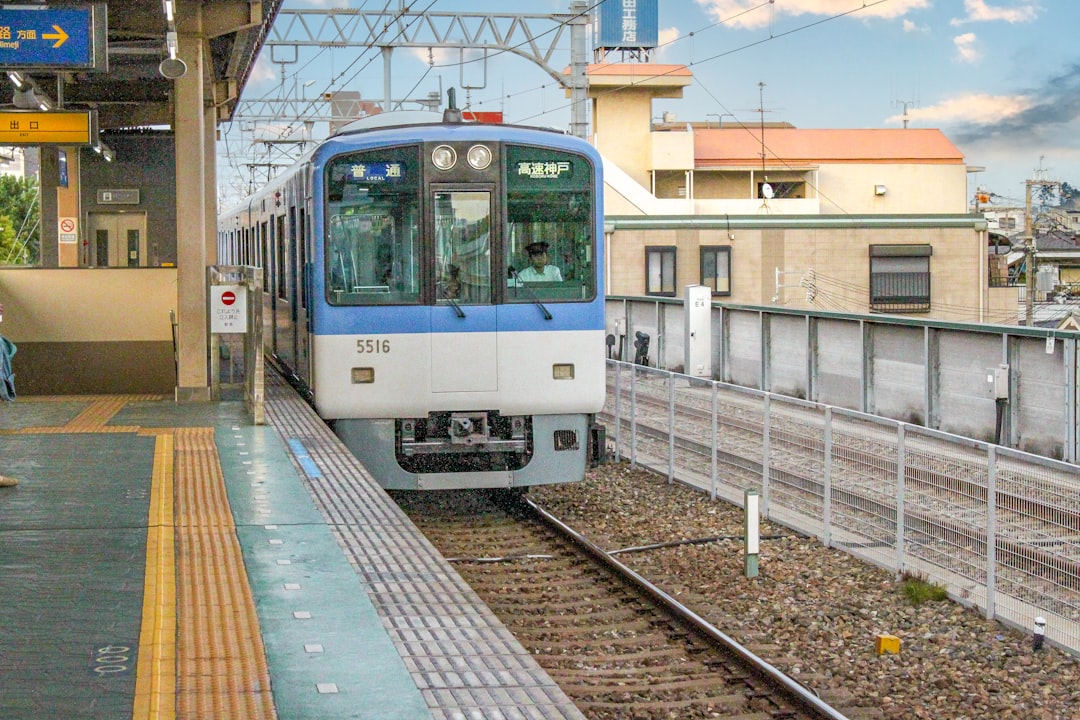
- Why Japan's Train System Is Worth Mastering
- Understanding the Types of Trains in Japan
- Getting Your Ticket or IC Card
- Navigating the Station Like a Local
- Onboard Etiquette: The Unwritten Rules
- Useful Apps and Tools for Train Travel
- Pro Tips for Stress-Free Train Travel in Japan
- A Sample Journey: Tokyo to Kyoto by Shinkansen
- Final Thoughts: Embrace the Journey
Why Japan’s Train System Is Worth Mastering
Japan’s train network is one of the most impressive in the world. Spanning from the snowy mountains of Hokkaido to the tropical shores of Okinawa, trains connect virtually every corner of the country with remarkable precision and efficiency. For many foreign visitors, stepping into a Japanese train station for the first time can feel overwhelming — the signs, the sounds, the sheer number of platforms. But here’s the truth: once you understand the basics, you’ll wonder how you ever traveled any other way.
Whether you’re planning to zip between Tokyo and Kyoto on the famous Shinkansen bullet train, or simply hop on a local subway to reach your hotel, this guide will give you the confidence to navigate Japan’s rails like a seasoned traveler.
Understanding the Types of Trains in Japan
Before you buy a single ticket, it helps to understand that Japan’s train system is not one unified network. It’s a combination of several operators and train categories, all working together in a beautifully coordinated system.
JR (Japan Railways) Trains
The JR Group is the backbone of long-distance travel in Japan. It includes the iconic Shinkansen (bullet train) lines, which can whisk you from Tokyo to Osaka in about two and a half hours. JR also operates local and express trains throughout the country. If you’re traveling between major cities, JR will likely be your go-to option.
Private Railway Lines
Many cities, especially Tokyo, Osaka, and Nagoya, are also served by private railway companies. Names like Hankyu, Keio, Odakyu, and Tokyu might not ring a bell now, but they’re essential for reaching neighborhoods that JR doesn’t cover. These private lines often offer competitive fares and reliable service.
Subway Systems
Major cities operate their own subway networks, which are ideal for getting around within city limits. Tokyo alone has two separate subway operators — Tokyo Metro and Toei Subway. Learning the color-coded lines makes navigation much simpler.
Shinkansen (Bullet Trains)
The Shinkansen deserves its own mention. These high-speed trains are a cultural icon of Japan and an extraordinary travel experience. They are punctual to the minute, incredibly smooth, and equipped with comfortable seats and ample luggage space. Riding the Shinkansen is not just transportation — it’s part of the Japan experience itself.
| Train Type | Best For | Typical Operator |
|---|---|---|
| Shinkansen | Long-distance travel between major cities | JR Group |
| Limited Express (Tokkyu) | Regional travel, reaching smaller cities | JR or Private Lines |
| Local/Express Train | Getting around within a region | JR or Private Lines |
| Subway | Urban navigation within major cities | Tokyo Metro, Osaka Metro, etc. |
| Monorail/Tram | Specific tourist routes or districts | Various local operators |
Getting Your Ticket or IC Card
One of the first decisions you’ll make as a train traveler in Japan is how to pay for your rides. You have two main options: individual tickets or a rechargeable IC card. For most visitors, the IC card wins hands down.
IC Cards Explained
IC cards like Suica and PASMO are prepaid smart cards that you tap on readers at ticket gates. Load money onto the card, tap in, ride your train, tap out — and the correct fare is automatically deducted. It’s fast, convenient, and eliminates the need to figure out exact fares every single time.
These cards are also accepted at convenience stores, vending machines, and many shops across Japan, making them doubly useful as a travel wallet. You can pick up a Suica or PASMO at major station ticket machines, and you can also add them to Apple Pay or Google Wallet on compatible devices before you even arrive in Japan.
The Japan Rail Pass
If you’re planning to travel extensively across the country — Tokyo, Hiroshima, Kyoto, Fukuoka, and beyond — then the Japan Rail Pass (JR Pass) is potentially one of the best investments you can make. It offers unlimited travel on most JR trains, including the Shinkansen (with some exceptions), for a set number of days.
The key word here is “potentially.” The JR Pass pays off if you’re doing significant long-distance travel. If you’re mostly staying in one city or region, individual tickets or an IC card may work out cheaper. Use an online fare calculator to compare before you buy.
Buying Individual Tickets
Ticket machines at every station sell individual fares. Most machines have an English-language option — look for the button near the screen. Fares are displayed on the route map above the machines. Simply find your destination, note the fare amount, select it on the machine, insert your money, and collect your ticket. Easy once you know the process.
Navigating the Station Like a Local
Japanese train stations can range from modest one-platform stops in the countryside to massive multi-level complexes with dozens of exits. Here’s how to keep your bearings.
Reading the Signs
Most major stations display signs in both Japanese and English (and often Chinese and Korean too). Look for directional signs in yellow and black or green and white, depending on the operator. Platform numbers, exit names, and connecting line information are clearly posted throughout.
Each station exit is typically labeled with a number or a nearby landmark — for example, “Exit A3 – Shibuya Crossing” or “South Exit – JR Station.” When searching for directions to a restaurant or attraction, always note which exit to use, as choosing the wrong one can add a surprising amount of walking time in a large station.
Entering and Exiting Through the Gates
Ticket gates in Japan are automated. If you’re using an IC card, tap it on the yellow reader as you walk through. If you have a paper ticket, insert it into the slot at the front of the gate — it will emerge from the top, so don’t forget to grab it. When you exit at your destination, the gate keeps your ticket (or deducts the fare from your IC card). If there’s a problem with your fare, a light will flash and the gates will close — simply approach the staffed window nearby and the friendly station attendant will sort it out.
Finding Your Platform
Once through the gates, follow the signs to your platform. Pay attention to the direction of the train — for example, on the JR Yamanote Line in Tokyo, trains run either clockwise (inner loop) or counterclockwise (outer loop). On the Shinkansen, check whether you need the train heading toward Tokyo or Osaka. If in doubt, check the destination board on the platform itself — it will show where the train terminates.
Onboard Etiquette: The Unwritten Rules
Japan’s train culture comes with a set of social norms that locals follow instinctively. As a visitor, showing awareness of these customs will earn you quiet appreciation from fellow passengers.
- Keep your phone on silent mode. Phone calls are considered disruptive on trains. Keep conversations brief or save them for when you’re off the train.
- Don’t eat on local or commuter trains. Eating is generally fine on long-distance Shinkansen rides, but not on city subways or express trains.
- Give up priority seats. Seats marked with special stickers near the doors are reserved for elderly passengers, pregnant women, and people with disabilities.
- Avoid taking calls. If you must make a call, step off at the next stop or wait until you exit the station.
- Line up on the platform markings. Colored arrows or lines on the platform show exactly where to queue for the train doors. Follow them — Japanese commuters do, without exception.
- Keep your voice low. Trains in Japan are remarkably quiet. Match the ambient volume of those around you.
- Stand to the side on escalators. Convention varies by region — in Tokyo, stand on the left; in Osaka, stand on the right. This allows people in a hurry to walk up or down on the other side.
Useful Apps and Tools for Train Travel
You don’t have to navigate Japan’s trains alone. Several excellent tools make the whole process significantly easier.
| App / Tool | What It Does | Best For |
|---|---|---|
| Google Maps | Door-to-door transit directions with fare estimates | All levels of traveler |
| Hyperdia | Detailed train schedules, fare breakdowns, and route options | Intermediate and frequent travelers |
| Japan Official Travel App | Maps, transport info, and travel guidance in multiple languages | First-time visitors |
| Suica / PASMO App | Manage your IC card balance and top up digitally | Smartphone-savvy travelers |
| Jorudan (Journey Planner) | Train route search with English interface | City-to-city planning |
Pro Tips for Stress-Free Train Travel in Japan
Travel Outside Rush Hour When Possible
Japanese commuter trains during rush hour — typically 7:30 to 9:00 in the morning and 5:30 to 8:00 in the evening on weekdays — can be extraordinarily crowded in major cities. If your schedule allows, plan sightseeing outings to start slightly later in the morning and return before the evening rush begins. You’ll have a far more comfortable ride.
Reserve Seats on Shinkansen in Advance
While some Shinkansen carriages are unreserved (non-reserved seat cars), it’s wise to book a reserved seat, especially during peak travel periods like national holidays, Golden Week, and the summer travel season. Reserved tickets can be purchased at JR ticket offices (called Midori no Madoguchi) or at ticket machines using your JR Pass.
Keep Small Bills and Coins Handy
While IC cards reduce the need for cash, ticket machines typically accept coins and 1,000-yen notes easily. Having smaller denominations on hand will save you the frustration of machines that don’t accept large bills.
Don’t Panic If You Take the Wrong Train
It happens to everyone. If you find yourself heading in the wrong direction, simply exit at the next station and board a train going the other way. With IC cards, the fare adjusts automatically. With paper tickets, stop by the station attendant window and explain your situation — they’re used to helping visitors and will sort it out calmly.
Download Offline Maps
Mobile data can be spotty inside some underground stations. Downloading offline maps of the cities you’re visiting means you can still navigate without a connection.
A Sample Journey: Tokyo to Kyoto by Shinkansen
To bring everything together, let’s walk through a typical journey. You’re in Tokyo and want to travel to Kyoto. Here’s how it works step by step:
- Head to Tokyo Station or Shinagawa Station — both are major Shinkansen departure points.
- If you have a JR Pass, exchange or validate it at the JR ticket office and reserve your seat.
- If paying separately, purchase your Shinkansen ticket at the ticket window or machine.
- Proceed to the Shinkansen gate (separate from regular JR gates), tap your card or insert your ticket.
- Find your platform — the Tokaido Shinkansen departs from platforms 14–19 at Tokyo Station.
- Board the train, find your reserved seat, stow your luggage, and enjoy the journey — roughly two and a half hours.
- Arrive at Kyoto Station, exit through the Shinkansen gates, and you’re in one of Japan’s most beautiful cities.
See? Once you know the steps, it’s a remarkably smooth experience.
Final Thoughts: Embrace the Journey
Japan’s train system can seem daunting at first glance, but it’s genuinely one of the most user-friendly transit networks in the world once you get your bearings. The signs are multilingual, the staff are helpful, the trains run on time, and the experience of traveling by rail through Japan — whether watching Mount Fuji glide past a Shinkansen window or squeezing onto a lively Tokyo subway at noon — is something you’ll carry with you long after you return home.
Start with an IC card, download a reliable navigation app, follow the onboard etiquette, and remember: every seasoned Japan traveler was once standing on a platform, wide-eyed and uncertain, just like you. The adventure starts the moment you tap in.