- Sushi in Japan Is a Completely Different Experience
- Know the Type of Restaurant You're Walking Into
- The Basics Every Visitor Should Know
- What to Say — Before, During, and After
- The Etiquette Points Most Visitors Miss
- Practical Tips for Your First Sushi Experience in Japan
- Your Action Steps for Eating Sushi in Japan
Sushi in Japan Is a Completely Different Experience
You’ve probably eaten sushi before. But walking into a sushi restaurant in Japan — especially for the first time — can feel surprisingly intimidating. The chef is right there. There’s no menu in English. Everyone seems to know exactly what they’re doing, and you don’t want to be the person who makes an obvious mistake.
The good news is that Japanese sushi culture is more welcoming than it looks from the outside. A few simple habits and a handful of Japanese phrases will take you from nervous foreigner to confident sushi-eater faster than you’d expect. This article covers the things most visitors never learn — including the etiquette gaps that even seasoned travelers get wrong.
Know the Type of Restaurant You’re Walking Into
Sushi etiquette is not one-size-fits-all. The rules that apply at a high-end omakase counter are very different from what’s expected at a casual conveyor belt restaurant. Getting this distinction right from the start will save you a lot of unnecessary stress.
Kaiten-zushi (Conveyor Belt Sushi)
This is the most casual and beginner-friendly option. Plates of sushi rotate past you on a belt, and you grab whatever looks good. There’s very little ceremony here. You can point, tap a touchscreen to order, and stack your empty plates without worrying about form. These spots are great for families, solo travelers, and anyone who just wants to eat without pressure. Relax and enjoy yourself.
Casual Sit-Down Sushi Restaurants
A step up from conveyor belt places, these restaurants have a menu and table service. You order from a server or sometimes directly from a chef at the counter. The atmosphere is friendly and informal. Basic etiquette matters here, but nobody is grading your technique.
Omakase and High-End Sushi Counters
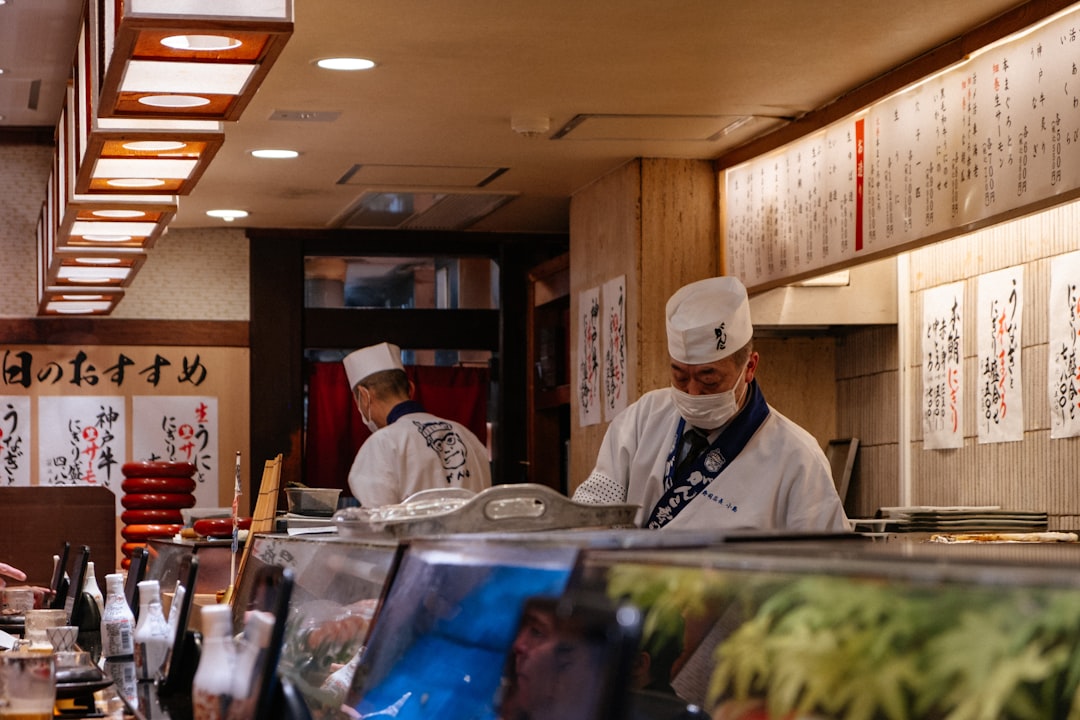
This is where etiquette becomes genuinely important. Omakase means “I leave it to you” — you trust the chef to serve what’s best that day, piece by piece, at their own pace. These are often intimate spaces with just a handful of seats at a counter. The chef is within arm’s reach. How you behave, what you say, and even how you eat will be noticed. The good news is that a little effort goes a very long way here, and the experience is unforgettable when you get it right.
The Basics Every Visitor Should Know
Use Your Hands — Yes, Really
One of the most common misconceptions about sushi is that using chopsticks is the polite choice. In fact, nigiri sushi (the kind with a slice of fish on a small mound of rice) is traditionally eaten with your fingers. Many Japanese diners at sushi counters pick up each piece with their hands, turn it upside down, and place it fish-side down on the tongue in one clean motion. Chopsticks are completely fine too, but don’t feel obligated to use them out of formality. There’s no wrong answer here — just do what feels natural.
Dip the Fish, Not the Rice
When using soy sauce, dip the fish side of the nigiri into the dish, not the rice. Dipping the rice causes two problems: it absorbs far too much soy sauce, overwhelming the flavor, and it often makes the nigiri fall apart entirely. Turn the piece gently so the fish meets the soy sauce first, then eat it in one or two bites. The chef has already seasoned the rice carefully — trust their work and go light on the soy sauce in general.
Ginger Is a Palate Cleanser, Not a Topping
That pile of pink pickled ginger (gari) sitting beside your sushi is not a condiment. It’s meant to be eaten between pieces, not on top of them. Its job is to refresh your palate so you can fully appreciate each new fish. Take a small piece between bites of different sushi, chew it slowly, and let it reset your taste buds before moving on. Piling ginger on top of your nigiri is one of those small habits that signals to a Japanese sushi chef that you’re not quite familiar with the format — easy to avoid once you know.
Wasabi: When to Add It and When Not To
At high-end counters, the chef will place a small amount of wasabi directly between the fish and the rice. This is intentional — they’ve chosen the amount they think works best with that particular piece. Adding more wasabi from the dish is not offensive, but it does slightly signal that you’re second-guessing their judgment. At casual restaurants, adding wasabi to your soy sauce and mixing is perfectly fine. Read the room: at an omakase counter, hold back; at a conveyor belt place, season to your heart’s content.
What to Say — Before, During, and After
Speaking even a few words of Japanese at a sushi counter transforms the experience. Chefs notice, appreciate it, and often open up more. You don’t need to be fluent — you just need a small handful of phrases used at the right moments.
Before You Eat: Itadakimasu
Say “itadakimasu” (ee-tah-dah-kee-mah-su) before your first bite. It roughly translates to “I humbly receive” and is used before any meal in Japan. At a sushi counter, this is a small but meaningful gesture that the chef will notice. You don’t need to announce it loudly — a quiet, natural delivery is perfect.
Talking to the Chef
At an omakase counter, a little conversation goes a long way. You don’t need to fill every silence, but a few simple reactions make the experience warmer for both sides. When a piece is genuinely good, saying “oishii” (oh-ee-shee, meaning “delicious”) with a nod is always appreciated. If you want to ask what a piece of fish is, you can point and say “kore wa nan desu ka?” (what is this?). Most sushi chefs in Japan have heard these questions from international visitors and will answer warmly.
If there’s something you can’t eat — an allergy or a strong dislike — communicate it early. You can say “[ingredient] wa taberaremasen” ([ingredient] I cannot eat). Writing this down in Japanese beforehand and showing it to the chef or staff is even better, especially for serious allergies.
After the Meal: Gochisousama Deshita
When you’re finished, say “gochisousama deshita” (go-chee-so-sah-mah desh-tah). This is the phrase used after a meal to express gratitude. At a sushi counter where the chef has served you personally, this is not just polite — it’s expected and genuinely meaningful. It closes the meal properly and shows you understood the experience.
The Etiquette Points Most Visitors Miss
Never Tip — It’s Not a Compliment
This one surprises many visitors, especially those coming from North America. Tipping is not part of Japanese dining culture. At a sushi restaurant, leaving extra money on the counter or trying to give money directly to the chef is considered awkward and can even come across as mildly insulting — as though you’re suggesting the price wasn’t fair, or that you’re treating the chef as a servant rather than a craftsperson. The best way to show your appreciation is through words: compliment the food, say your thank-you phrases, and come back again. That means far more.
Reservations Are Serious — Don’t No-Show
If you’ve booked a reservation at a high-end sushi restaurant, treat it as a genuine commitment. Unlike many restaurant types, a sushi chef sources and prepares fish specifically for the number of guests expected that day. If you don’t show up, those ingredients go to waste. Many premium sushi restaurants require a credit card to hold your reservation and will charge a significant cancellation fee — sometimes the full price of the meal — if you cancel with little notice or simply don’t appear.
If your plans change, call or message the restaurant as early as possible. Even if you don’t speak Japanese, most higher-end establishments catering to international visitors will have some English communication ability, or you can use a translation app. Canceling properly is always better than vanishing.
Sake and Sushi: A Subtle Distinction
You’ll often see sake on the menu at sushi restaurants, and it’s absolutely fine to order it. But there’s a traditional nuance worth knowing: sake is classically paired with sashimi (raw fish without rice) rather than sushi itself, because both sake and sushi contain rice, and combining them was historically considered redundant. This isn’t a hard rule, and plenty of Japanese people drink sake with sushi without a second thought. But if you want to order drinks the way a traditionalist would, have sake with sashimi or at the start of a meal, and switch to beer or green tea once the sushi starts arriving. It’s a small detail that experienced diners will appreciate.
Practical Tips for Your First Sushi Experience in Japan
- Start with conveyor belt sushi if you’re a beginner. Chains like Sushiro and Kura Sushi are affordable, fun, and completely pressure-free. They’re a great way to try many different types of fish without commitment.
- Eat each piece immediately. Sushi is designed to be eaten the moment it’s served. The rice is at its best at body temperature, and waiting causes it to harden and lose flavor.
- Don’t mix wasabi into your soy sauce at an omakase restaurant. This is fine at casual places, but at a high-end counter, use condiments as the chef intends.
- Ask before taking photos. At intimate sushi counters, it’s polite to ask the chef before photographing your meal. A simple gesture pointing at your phone and a questioning look usually gets the message across. Most chefs are fine with it but appreciate being asked.
- Order the seasonal special. Japanese sushi is deeply tied to the seasons. Ask the chef what’s particularly good that day — even just “osusume wa nan desu ka?” (what do you recommend?) opens up the conversation and usually gets you the best fish in the house.
Your Action Steps for Eating Sushi in Japan
Here’s exactly what to do before your next sushi meal in Japan:
- Practice three phrases out loud: “itadakimasu,” “oishii,” and “gochisousama deshita.” You don’t need to memorize more than this to make a strong impression.
- Book your first experience at a kaiten-zushi restaurant to get comfortable with the food and the setting before moving on to a more formal counter.
- If you have food allergies, write them down in Japanese before you go. Use a translation app or ask your hotel staff to help you prepare a short note you can show restaurant staff.
- Honor your reservations. If you book an omakase experience, put it in your calendar with a reminder to confirm or cancel with at least 48 hours’ notice if plans change.
- Leave the tip in your pocket. Express your appreciation through words instead — a sincere “gochisousama deshita” at the end of a meal will be remembered long after a stranger’s extra coins are forgotten.
Sushi in Japan is one of the most rewarding food experiences in the world. The etiquette around it isn’t meant to be a test — it’s simply the culture that grew up around respecting the chef’s craft and the quality of the ingredients. Once you understand that, everything else falls naturally into place.
Photo by Johan Mouchet on Unsplash