Why Sengoku Tea Master Sen no Rikyū Became Beloved by Those in Power Through Chanoyu
The Art of Tea as More Than Ceremony
Chanoyu (the way of tea) is far more than the formal preparation of tea. When we consider why the great unifiers of Japan—Oda Nobunaga, Toyotomi Hideyoshi, and Tokugawa Ieyasu—all kept tea masters as trusted advisors and held tea gatherings with such eagerness, we discover a deeper strategy at work: the cultivation of politics, diplomacy, and human relationships.
Sen no Rikyū in particular was known not simply as a “tea instructor,” but as a figure who won the trust of Sengoku daimyo (feudal lords). In this essay, I draw on historical records to reveal why chanoyu held such profound value among those in power, and how one tea master rose to become the favored figure of his era.
The Heart of the Matter
Chanoyu was beloved by those in power because within the tea room—a closed, intimate space—one could temporarily transcend hierarchical rank and build genuine human trust. Rikyū exploited this characteristic brilliantly, earning his position as political advisor to both Nobunaga and Hideyoshi. Tea was not mere etiquette, but a diplomatic tool and a form of power in the Sengoku age.
The “Equality” That Tea Brought
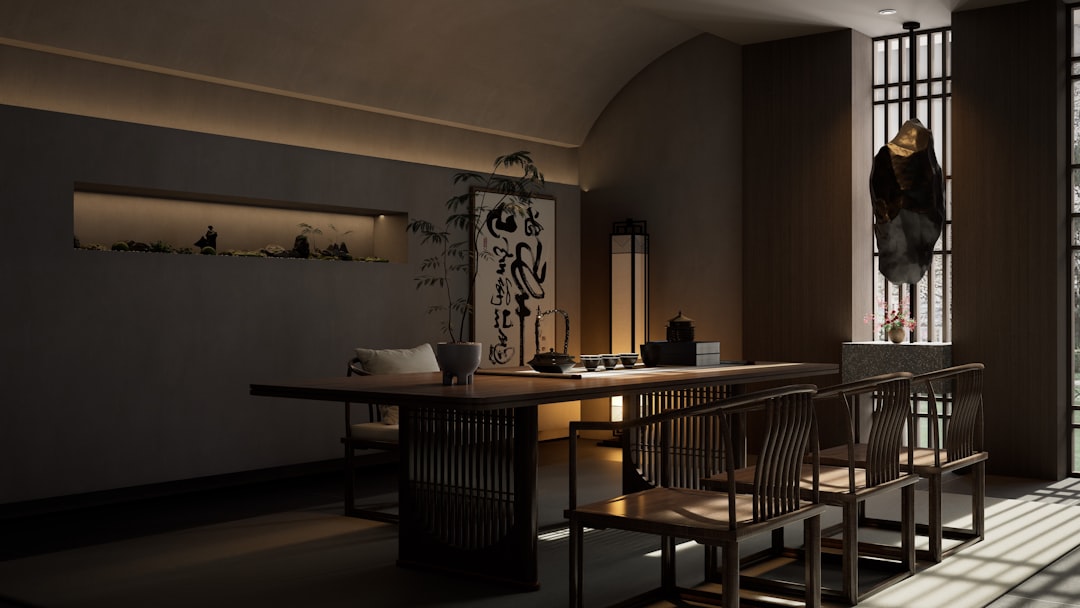
During the Sengoku period, the social hierarchy was rigid. Before a daimyo, even samurai, merchants, and commoners were forced into attitudes befitting their rank. Yet inside the tea room, everything changed. In a narrow four-and-a-half mat space, a daimyo and a merchant sat at the same level, drinking from the same bowl. For people of that era, this was profoundly revolutionary.
Rikyū systematically eliminated rank from his tea room designs. All who entered passed through the same low doorway (niriguchi), bowing as they went—whether of high or low station. The tea bowls themselves were unified and austere. Through such innovations, Rikyū perfected chanoyu as a “ritual that brought human relationships closer to equality.”
Oda Nobunaga was the first ruler to recognize this quality. According to records in the Nobunaga Chanoyu Goseido-ki (Nobunaga’s Tea Governance Record), Nobunaga began to favor Rikyū in the 1570s, using tea gatherings with him as occasions to determine the promotion of retainers and make political decisions. Within a single bowl of tea, power and trust coexisted.
Rikyū, Nobunaga, and Hideyoshi—How a Tea Master Drew Near to Power
Rikyū succeeded as an independent tea master, not as a retainer of any single daimyo house, for reasons that went beyond mere technical excellence. He established a unique position: the “trustworthy intermediary.”
Under Nobunaga’s rule, conflict and factional rivalry among retainers were constant. In this environment, Nobunaga turned to Rikyū for counsel. Whom should he advance? How could trust deepen among his generals? Rikyū answered by hosting tea gatherings that provided a space to resolve such questions. When Hideyoshi established the Toyotomi regime, Rikyū served as his close advisor, overseeing tea policy.
Rikyū’s later years coincided with Hideyoshi’s taste for ostentatious display. After consolidating power, Hideyoshi had a golden tea room built and sponsored extravagant tea gatherings. Rikyū, by contrast, advanced wabi-cha (tea of simplicity)—an aesthetic of austerity and restraint. This conflict would lead to Rikyū’s tragic end.
In 1591, Toyotomi Hideyoshi ordered Rikyū to commit suicide. Officially, he was accused of disrespect toward Hideyoshi, but historians now believe Rikyū was punished for silently resisting Hideyoshi’s ostentatious aesthetic through his art. Rikyū’s masterwork in his final years, the tea room Tai’an at Daitoku-ji in Kyoto, measures barely two mats. Here, against Hideyoshi’s golden splendor, Rikyū presented the minimal beauty—the ultimate wabi (understated elegance).
The Tea Room as “Sealed Diplomatic Space”
Tea gatherings proved useful to those in power for another reason: they functioned as “spaces for secret negotiation.” The tea room permitted no uninvited guests. Participation was limited to a handful of people, and absolute trust was the foundation between host and guest.
During the Sengoku period, daimyo exploited this exclusivity masterfully. They would invite generals from ostensibly hostile clans to tea gatherings and conclude treaties within the tea room itself. Promises exchanged in such formal, ceremonial spaces were almost never broken. The tea gathering’s very formality guaranteed political promises.
Rikyū understood this function completely. This is precisely why Nobunaga and Hideyoshi entrusted him with the mediation of major political decisions. Every gesture Rikyū made in entertaining a guest—the choice of tea bowl offered, the timing of the gathering—functioned as a message of trust to the other party.
That Rikyū, a merchant from Kyoto and Sakai, gained entry to the inner circles of Oda Nobunaga and Toyotomi Hideyoshi was not because he was merely a “technician of tea,” but because he was the “architect of trust-building systems for those in power.”
Rikyū’s Aesthetic: Revealing the Limits of Power
Rikyū’s final choice was not merely the tragedy of a tea master, but a symbol of an era’s turning point. As Hideyoshi’s power became absolute, Rikyū offered quiet resistance through the aesthetic of wabi-cha.
The essence of wabi-cha is “imperfection” and “silence.” While Hideyoshi favored grand halls gleaming with gold, Rikyū prepared tea in a two-mat room from chipped ceramics. This contrast was also a critique of the ruler’s extravagance.
Rikyū’s teachings continued after his death. His disciples established the iemoto (school headmaster) system during the Edo period, and chanoyu became essential learning for samurai. Yet Edo-period tea practice lost the nuance of “resistance to power” that Rikyū had demonstrated, becoming instead a more formalized ritual.
This transformation was inevitable. As chanoyu’s original power—transcending rank and building trust—became institutionalized, its revolutionary spirit faded.
※This article is based on information current as of May 14, 2026. Temple and shrine visiting hours and event dates are subject to change; please verify with official websites before your visit.
Travel is less about planning and more about the insights you discover along the way. This article offers guidance, but your final decision to visit should reflect local conditions and the season.
Summary
- Chanoyu was a diplomatic tool for Sengoku rulers, allowing them to transcend social hierarchy and build human relationships.
- Sen no Rikyū perfected the tea room as a closed space for political trust-building and served as a trusted advisor to both Oda Nobunaga and Toyotomi Hideyoshi.
- Rikyū’s wabi-cha was a critique of Hideyoshi’s ostentatious view of power, and his death by suicide represented his final statement of resistance as a tea master.
Photo by POOJAN THANEKAR on Unsplash