A Warlord’s Tea Bowl and a Poet’s Brushstroke: Small Moments That Shaped Japanese History
A common assumption about Japanese history is that the big events — battles, political reforms, the rise and fall of clans — are where the meaning lives. The names Tokugawa Ieyasu, Oda Nobunaga, and Toyotomi Hideyoshi appear in every textbook, attached to sweeping narratives about unification and power.
But I find the smaller stories more revealing. Not the outcomes of battles, but what a general did the night before one. Not the official record of a tea ceremony, but why a warlord wept over a cracked bowl.
These details do not contradict the larger history. They deepen it.
The Point
The most illuminating windows into Japanese history are often the smallest ones: a poem composed under pressure, a tea bowl treated as a sacred object, a farewell letter written in the hours before execution. These episodes reveal how deeply aesthetics, politics, and personal conviction were intertwined in historical Japan — and why that intertwining still echoes today.
The Tea Bowl That Was Worth More Than a Castle
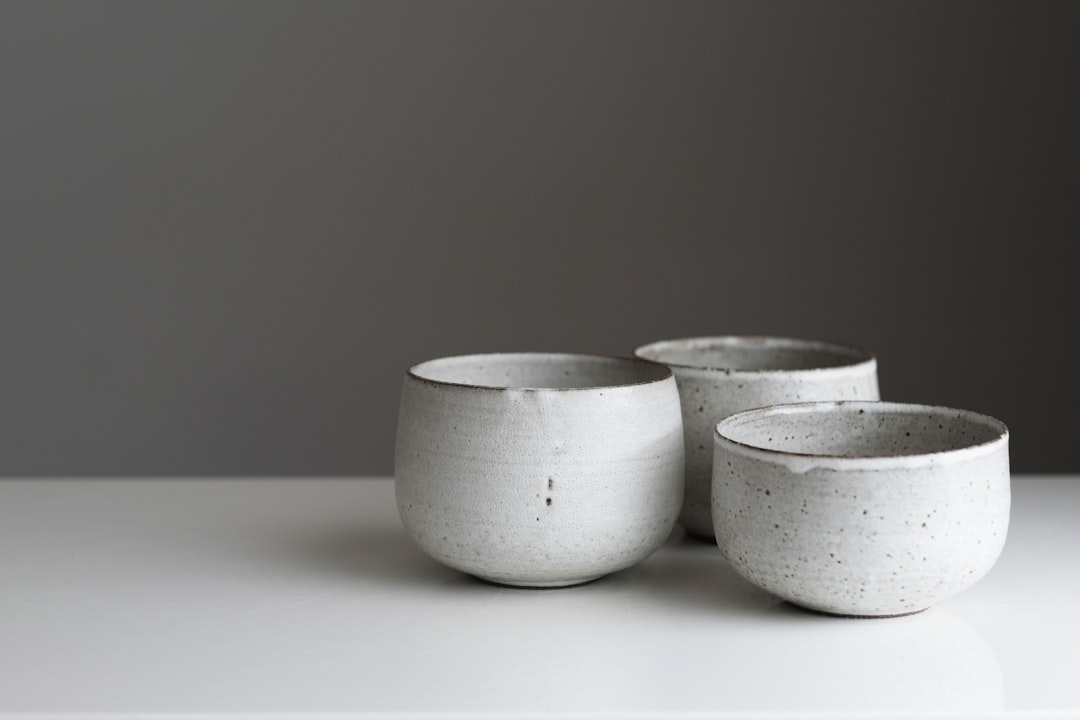
In the sixteenth century, Oda Nobunaga elevated the practice of chado — the Way of Tea — into a political instrument. He used rare tea utensils, known as meibutsu (famous things), as rewards for military achievement. A general who captured a strategically vital castle might receive not land, but a single ceramic piece. This was not eccentricity. It was calculated.
The logic ran like this: land grants divided power and could generate rival clans over generations. A tea bowl could not raise an army. But within the culture Nobunaga was building, to possess a meibutsu piece meant you stood within his circle of taste and trust. It was prestige made tangible — and fragile.
The most famous example involves a tea vessel called Tsukumogami Nasu, a small eggplant-shaped jar (a natsume) that Nobunaga prized enormously. When the castle of Nijo went up in flames following the Honnoji Incident in June 1582 — the night Akechi Mitsuhide’s forces surrounded Nobunaga and he died — there was genuine mourning among tea practitioners not only for the man, but for the objects that burned with him. Several meibutsu pieces were lost in that fire. The grief was recorded.
This is not as strange as it sounds. Nobunaga’s contemporary, the tea master Sen no Rikyu, had spent decades arguing that the spirit of wabi — a kind of austere, impermanent beauty — was the proper register for the tea room. Under that philosophy, a rough, asymmetrical Korean rice bowl (Ido chawan) could carry more meaning than a flawlessly glazed Chinese piece. The value was not in perfection. It was in presence.
Sen no Rikyu himself died in February 1591, ordered to commit seppuku by Toyotomi Hideyoshi. The reasons remain debated among historians — possible political friction, an insult to Hideyoshi’s authority, a dispute over a tea room gate at Daitoku-ji temple in Kyoto on which Rikyu’s carved likeness had been placed above the entrance (forcing Hideyoshi to walk beneath it). Whatever the precise cause, the manner of Rikyu’s death was framed, to the end, in aesthetic terms. He composed a death poem. He handled his final tea bowl before the act. The sword he used was then broken, following custom.
A tea bowl worth more than a castle. A master whose death was staged with the same care as a ceremony. The aesthetics were never separate from the power — they were the power.
Basho Walked Into the North and Left a Document of Impermanence
In May 1689 (Genroku 2 by the old calendar), the poet Matsuo Basho set out from Edo on a journey north and west through Japan’s interior. He was forty-five years old, in uncertain health, and he reportedly said goodbye to his friends as if he did not expect to return. The journey lasted about five months and covered roughly 2,400 kilometers on foot and by horse.
The result was Oku no Hosomichi — usually translated as The Narrow Road to the Deep North — a prose-and-haiku travel account now considered one of the foundational texts of Japanese literature.
What strikes me about the journey is not the famous poems, though they are extraordinary, but the fact that Basho was doing something politically quiet and culturally enormous at the same time. He was traveling to places associated with fallen warriors — the ruins of Hiraizumi, where the Fujiwara clan had built a brief Northern paradise in the twelfth century before being destroyed by Minamoto no Yoritomo — and writing elegy.
At Hiraizumi, standing in a summer field where the hall of the Fujiwara once stood, Basho composed what many consider his most emotionally direct haiku:
natsu kusa ya / tsuwa mono domo ga / yume no ato
Roughly: “Summer grasses — all that remains of warriors’ dreams.”
This is not a political poem. It does not argue for anything. But it places the entire arc of military ambition — the building, fighting, and collapse of a clan that ruled northern Japan for nearly a century — inside a single observation of overgrown grass. Everything the Fujiwara built, including the gold-decorated Konjikido hall at Chuson-ji temple (which still stands today and is designated a UNESCO World Heritage Site), was reduced to vegetation.
Basho was writing in the Edo period, under a government that had brought relative peace after a century of civil war. The nostalgic grief for fallen warriors was, paradoxically, a safe emotion — those warriors were long dead and belonged to no current faction. But the poem still does something vertiginous: it suggests that the same will be true of everything present. All ambitions become summer grass.
The journey was not only literary. Basho was, in practical terms, gathering material, visiting notable poets along the route, and building the network of haiku practice that would define the haikai tradition for generations. His school, the Shofu style, influenced poetry in Japan for more than a century after his death in 1694.
A poet walking into the north, composing grief at ruins, shaping a literary tradition. The small and the vast, folded into each other.
Key Threads in This Article
- Nobunaga used tea utensils as political currency — rare objects conferred status within a culture he deliberately elevated
- Sen no Rikyu’s execution in 1591 illustrated how inseparable aesthetics and authority had become in the Sengoku and early Edo political world
- Basho’s 1689 journey produced one of Japanese literature’s most enduring texts — and a model of how poets processed historical loss
- The *sengoku jidai* (Warring States period) produced cultural forms — tea ceremony, linked verse, Noh drama — that were ways of managing the psychological weight of constant uncertainty
A Farewell Letter Written at Dawn
The sengoku jidai — the Warring States period, roughly 1467 to 1615 — generated a remarkable body of last writing. Generals and samurai who faced execution or were ordered to commit seppuku frequently composed final poems or letters. This was not unusual or optional. It was expected. The quality of one’s death, in the cultural logic of the period, reflected the quality of one’s life.
Among the most frequently cited examples is the farewell poem attributed to Torii Mototada, a retainer of Tokugawa Ieyasu who held Fushimi Castle in the summer of 1600. Ieyasu had moved east, and the forces of Ishida Mitsunari, loyal to the Toyotomi, were advancing. Mototada stayed behind with a small force — approximately 2,000 men against a reported 40,000 — knowing the castle would fall. He stayed not because he believed victory was possible, but because holding the castle would buy Ieyasu time.
The letter Mototada reportedly wrote to his son before the siege is preserved in historical records, though scholars note that some portions may have been refined in later transmission. Its core argument is simple: a samurai’s life belongs to his lord. The question is not whether to die, but whether the death serves something.
Fushimi Castle fell on September 8, 1600 (the 24th day of the 7th month of Keicho 5). Mototada died in the fighting. Ten days later, at the Battle of Sekigahara on October 21, Ieyasu’s forces won the decisive engagement that effectively handed him control of Japan. The time Mototada bought was the time that mattered.
I find myself returning to the structural shape of this story. A man makes a decision in full knowledge that it ends him. He writes to his son. He waits. The political outcome — Tokugawa hegemony lasting until 1868 — follows partly from this act of deliberate sacrifice. The small moment carries enormous weight.
This pattern repeats throughout the period. Uesugi Kenshin, the warlord of Echigo province, was known to weep before battles and afterward. Whether from religious feeling, genuine grief at the deaths he caused, or both, the accounts are consistent enough to suggest it was not performance. Even in a period defined by violence, the culture insisted on emotional accountability.
Note on Sources
Many historical documents from the sengoku period survive in later copies rather than originals, and some were edited, embellished, or partly invented in the Edo period to serve commemorative or political purposes. When reading these accounts — Mototada’s letter, Nobunaga’s reputed words, Basho’s travel diaries — it helps to hold them as cultural texts as well as historical records. What people chose to preserve or embellish tells us as much about their values as the events themselves.
What the Noh Stage and the Battlefield Had in Common
One more thread worth pulling. During the Muromachi period (1336–1573), Noh drama developed under the patronage of the Ashikaga shoguns. The playwright and performer Zeami Motokiyo — working in the late fourteenth and early fifteenth centuries — codified the aesthetic principles of Noh in a series of treatises, including Fushikaden (also known as Kadensho), written around 1400–1402.
Noh, in its mature form, is a theater of ghosts and return. The most common dramatic structure — the mugen Noh or “dream Noh” format — involves a traveler encountering the spirit of someone long dead, who has not been able to let go of a moment of intense emotion: grief, jealousy, attachment, pride in battle. The play is the process of working through that attachment.
The audience for these plays, in the Muromachi period, was frequently the warrior class itself — men who had survived battles, who had ordered deaths, who lived under the constant possibility of being killed or having to kill. The drama offered a kind of symbolic space to process what daily life could not accommodate.
This is not unique to Japan. Greek tragedy served related functions in Athens. But the specific Japanese configuration — warriors watching plays about warriors who cannot rest, in a form that emphasized stillness, silence, and the weight of the past — tells us something about how this culture managed psychological reality.
Zeami wrote that the highest quality a Noh performer could achieve was yugen: a sense of mysterious grace, a beauty that carries an undertone of sadness. He distinguished this from mere skill or entertainment. Yugen was something that happened in the space between performer and audience when both were fully present.
The same vocabulary — yugen, mono no aware (the pathos of things), wabi, sabi — runs through tea ceremony, haiku, garden design, and the aesthetic dimension of swordsmanship. These were not separate disciplines that happened to share terminology. They were a single attempt, spread across multiple forms, to develop a coherent relationship with impermanence.
A warlord’s tea bowl. A poet walking north. A retainer writing to his son at dawn. A theater of ghosts built for warriors who had not yet died.
The history is in these details. The details are the history.
This article is based on information as of 2026-05-28. Temple and shrine hours, as well as event schedules, may change. Please check the official websites before visiting.
Travel often rewards what unfolds in the moment more than what was planned. This article is for reference; please make your final decisions based on current conditions and the season.
A Quiet Summary
- The elevation of tea culture by Nobunaga and the tragic death of Sen no Rikyu in 1591 illustrate how thoroughly aesthetics and political power were fused in historical Japan — neither was the decoration of the other.
- Basho’s Oku no Hosomichi (1689) is a literary document, but it is also an act of historical mourning: the ruins at Hiraizumi become a lens through which all ambition looks temporary.
- The warrior culture of the sengoku jidai produced not only military history but cultural forms — Noh, tea ceremony, the tradition of final poems — designed to give meaning and shape to lives lived under constant uncertainty.
The season turns. The summer grass grows back. And somewhere in the Tohoku interior, a field quietly holds the memory of a dynasty that burned.