How to Visit a Japanese Shrine: Etiquette, History, and What the Rituals Actually Mean
Most visitors to a Japanese shrine walk through the torii gate, look around, take a few photos, and move on. That is a perfectly reasonable thing to do. But at some point, watching someone else bow carefully at the water basin or clap twice before the main hall, you start to wonder: what is actually happening here?
This article is my attempt to answer that question — not as a catalog of rules, but as a practical companion for anyone who wants to engage with shrine visits more deliberately.
The Short Version
A shrine visit follows a quiet, three-part rhythm: purification at the temizuya (water basin), approach to the main hall, and a specific sequence of bowing and clapping. Each step has meaning rooted in Shinto’s core concept of harae — the clearing of spiritual impurity. You do not need to be a believer to participate respectfully.
The Torii Gate and What Lies Between It and the Main Hall
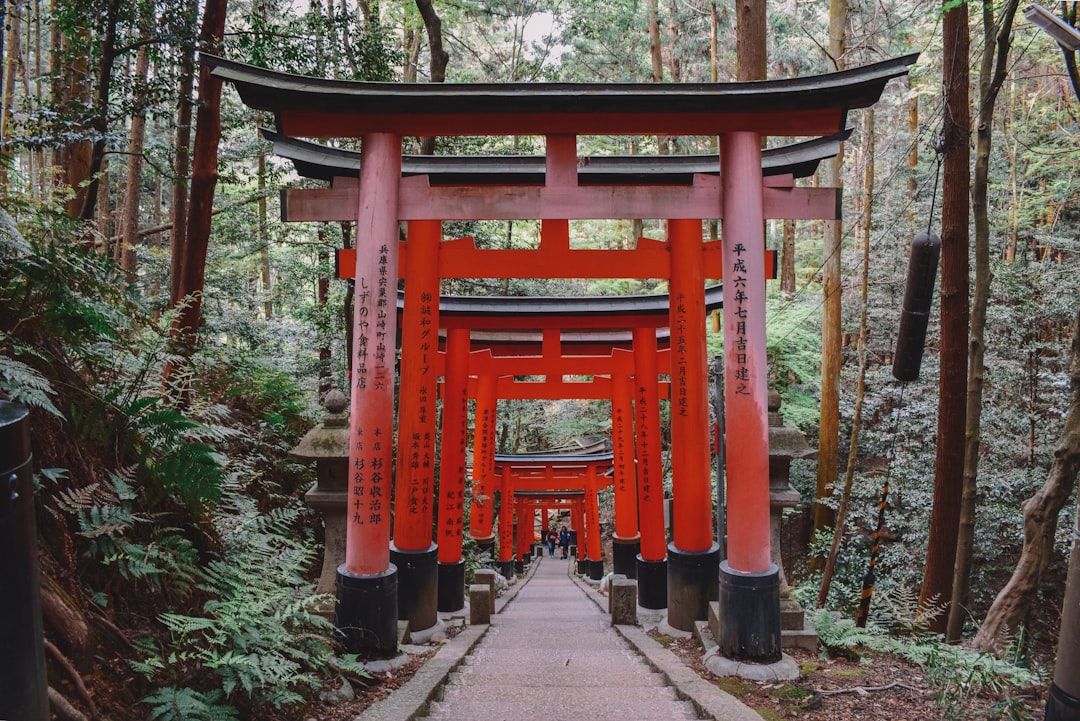
The torii marks a threshold. Physically, it is just wood or stone. But in Shinto understanding, crossing it means stepping from ordinary space into sacred space.
At large shrines like Fushimi Inari Taisha in Kyoto or Meiji Jingu in Tokyo, the path from the outermost torii to the main hall — called the sandō — can stretch for several hundred meters. At smaller neighborhood shrines, the transition takes only a few steps. The length is different; the logic is the same.
One small point of etiquette here: when passing through a torii, many visitors step slightly to the side rather than walking directly down the center. The center of the path is traditionally considered the passage of the deity. Whether you follow this convention is your choice. I mention it because it tends to feel natural once you know the reason behind it.
The sandō often passes through a grove of tall trees — cedar, camphor, pine. This is not coincidental. In Shinto thought, old trees and natural formations are understood as dwelling places of kami (divine spirits). The vertical quality of the forest — light coming down through branches, the scale of old trunks — reinforces the sense of transition that the torii initiated.
Purification at the Temizuya: The Ritual Washing Sequence
Before approaching the main hall, you stop at the temizuya, the stone water basin near the entrance. This is temizu, the ritual hand-washing that precedes the actual offering.
The sequence is specific, and it matters:
-
Step 1: Take the ladle with your right hand
Scoop water from the basin. Pour it over your left hand. The goal is rinsing, not thorough washing — a small flow is sufficient.
-
Step 2: Transfer the ladle to your left hand
Pour water over your right hand. The right hand now receives what the left had done for it.
-
Step 3: Return the ladle to your right hand
Cup your left hand and pour a small amount of water into it. Rinse your mouth — quietly, discreetly, and without letting the water fall back into the basin. Some people skip this step; at many shrines today, visible signage requests skipping it due to hygiene considerations.
-
Step 4: Rinse the left hand once more
A final pour over the left hand. Then tilt the ladle upright so remaining water runs down the handle, and return it to the basin.
The whole thing takes about thirty seconds. The point is not cleanliness in a sanitary sense — it is harae, the symbolic release of impurity (kegare) before approaching the kami.
During my first careful attempt at this sequence, I got it slightly wrong in the middle and had to start over. No one reacted. The basin was quiet. The important thing is the attention you bring to it, not a flawless performance.
Standing Before the Main Hall: Two Bows, Two Claps, One Bow
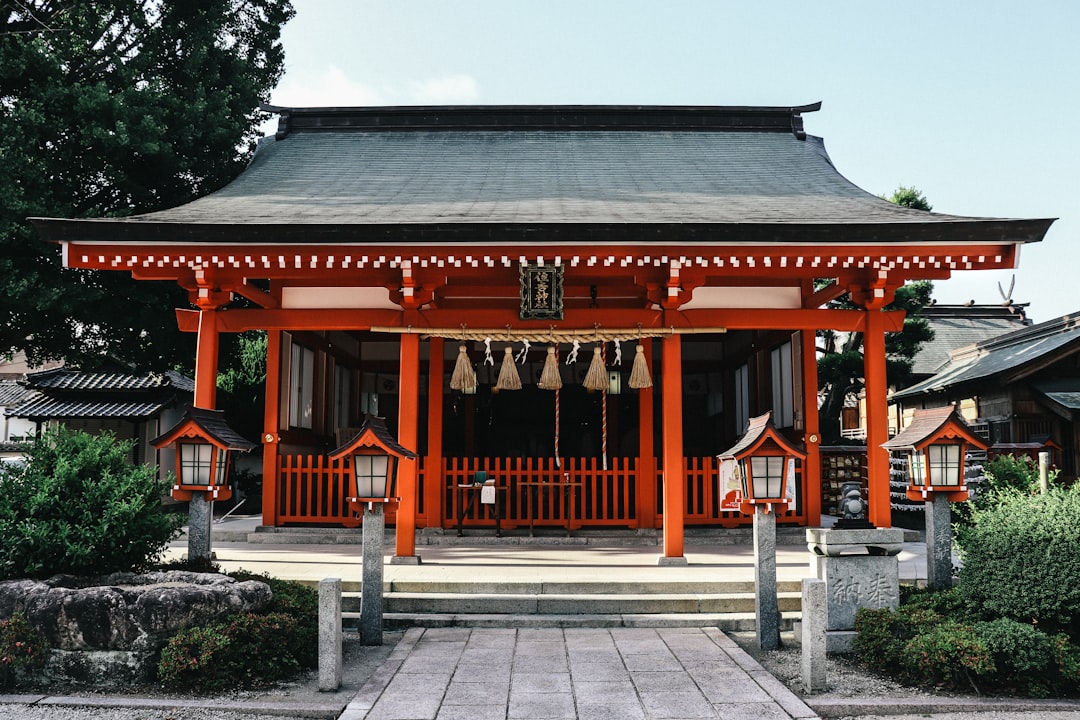
The formal etiquette at the haiden (worship hall) follows a pattern known as ni-rei ni-hakushu ichi-rei — two bows, two claps, one bow. This sequence was standardized by the Association of Shinto Shrines (Jinja Honchō, established in 1946) as the common form across most shrines in Japan, though some shrines observe variations.
Here is how it unfolds in practice. You approach the offertory box (saisen-bako), drop a coin — the amount is genuinely not important, though five-yen coins (go-en) are popular because go-en sounds like the word for “connection” or “fate” — and then bow twice, deeply, from the waist.
After the two bows, raise your hands to about chest height and clap twice. The claps are meant to announce your presence to the kami. There is a theory that sound, in Shinto ritual, serves as a summoning — the same principle behind the ringing of the large bell (suzu) you may see hanging above the offering box. After your two claps, hold your hands together briefly in silent prayer or reflection. Then bow once more, deeply, to close the sequence.
A note on variations
Izumo Taisha, one of Japan’s oldest and most significant shrines in Shimane Prefecture, follows a four-clap sequence (shi-hai) rather than two. If you are visiting a specific shrine, it is worth checking the local custom in advance. The Jinja Honchō’s official site (jinjahoncho.or.jp) documents these regional differences.
This sequence — the bows, the claps, the moment of stillness — is not theater. It is structure. And structure, in ritual contexts, does something useful: it creates a brief interruption in ordinary mental flow. Whether or not you hold any religious belief, the physical act of bowing twice and clapping twice tends to produce a small, genuine pause. That pause is probably the point.
The History Behind What You Are Doing: Shinto, Shrines, and 1,500 Years of Practice
Shinto does not have a single founder or a fixed founding date. The tradition evolved gradually from animist practices in the Japanese archipelago, centered on the belief that natural phenomena — mountains, rivers, storms, particular trees — possessed kami. These were not deities in a Western theological sense; they were more like concentrated presences, sometimes benevolent, sometimes dangerous, always requiring acknowledgment.
The earliest written references to shrine structures appear in the Nihon Shoki (Chronicles of Japan), compiled in 720 CE. The Grand Shrine of Ise (Ise Jingū), dedicated to Amaterasu, the sun deity, is considered among the oldest and most sacred in Japan. Its main buildings are ritually dismantled and rebuilt every twenty years — a practice called Shikinen Sengū — with the 63rd cycle completed in 2013. This cycle is expected to continue: the 64th rebuilding is planned for 2033.
What this history means for a modern visitor is something like this: the structure you are walking into is not a museum exhibit. It is a living system that has been maintained, adjusted, and continued for more than a millennium.
Buddhism arrived in Japan in the 6th century CE (traditionally dated to 552 CE by the Nihon Shoki), and for roughly 1,200 years, Buddhist and Shinto practice co-existed in a syncretic arrangement called shinbutsu-shūgō — the combination of deities. Many shrine complexes contained Buddhist halls; many Buddhist temples kept Shinto shrines on their grounds. This was considered normal.
The Meiji government’s 1868 shinbutsu bunri edict forcibly separated the two traditions — Buddhist imagery was removed from shrines, and the two institutions were administratively divided. What you see at a typical Shinto shrine today reflects that 19th-century separation as much as any ancient form.
Understanding this history does not make the bowing and clapping more or less sincere. But it does prevent a particular kind of naivety — the assumption that what you are seeing is purely ancient, unchanged, and culturally monolithic. Shinto is a living tradition, which means it has been shaped by politics, conflict, and negotiation, like every living tradition.
*This article is based on information as of 2026-05-23. Temple and shrine hours, as well as event schedules, may change. Please check the official websites before visiting.
Travel often rewards what unfolds in the moment more than what was planned. This article is for reference; please make your final decisions based on current conditions and the season.
What Stays With You After the Visit
A shrine visit, done with some attention, leaves a particular kind of residue — not mystical, just quiet. The structure of the ritual forces a few minutes of deliberate movement in a space that is not optimized for speed or consumption. That quality is increasingly rare, and worth noticing.
To summarize the practical points:
- The approach along the sandō and through the torii is already part of the ritual — not just transit to the “main event”
- The temizuya hand-washing follows a specific four-part sequence: left hand, right hand, mouth (optional), left hand again, then rinse the ladle handle
- At the main hall, the standard form is ni-rei ni-hakushu ichi-rei (two bows, two claps, one bow), though some shrines — notably Izumo Taisha — use regional variations
I find myself returning to shrines not for any particular belief but for the rhythm they impose. The path is the same. The water is cold. The bows are still slightly awkward. Each visit is a small interruption in ordinary time.
The next visit will come when the season turns.
This article contains references to recommended products.