How to Visit a Japanese Shrine: Ritual, Meaning, and What Most Visitors Miss
The gate is easy to find. The ritual is not.
Most first-time visitors to a Japanese shrine walk through the torii, glance around, then stand at the main hall unsure of what to do next. They watch the person next to them, copy the motions, and leave with a vague feeling that something was happening — something they couldn’t quite read.
I have felt that confusion myself, and I have watched it on the faces of visitors at shrines from Fushimi Inari Taisha in Kyoto to Meiji Jingu in Tokyo. The ritual is not hidden, but it is not explained on a sign either. It lives in the body, passed down through repetition and proximity.
This article works through the full sequence of a shrine visit — from the moment you approach the torii to the quiet bow at the end — with attention to why each step exists, not just what it looks like.
The short version
A standard shrine visit follows a fixed sequence: purify hands at the temizuya, approach the main hall, offer a coin, ring the bell, bow twice, clap twice, bow once more. This is called niren nihakushu ichirei (二礼二拍手一礼), and it has been the standard form recommended by the Association of Shinto Shrines since the postwar period. Each step carries meaning. None is decoration.
The Torii and the Ground You Are Entering
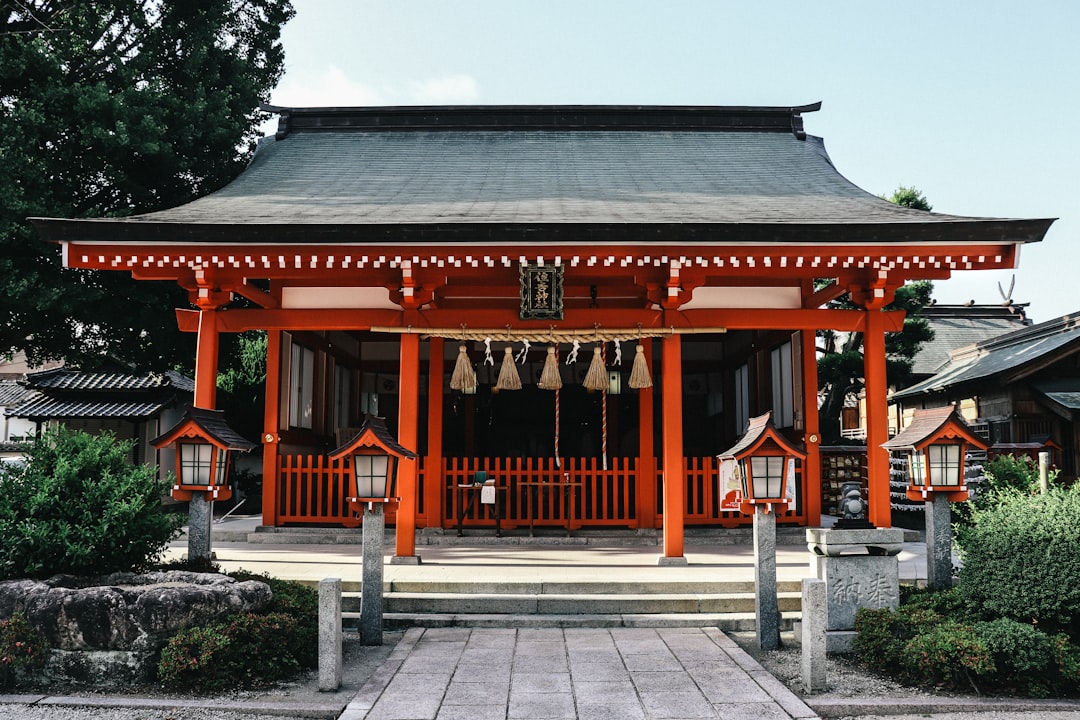
Before any gesture, there is the gate.
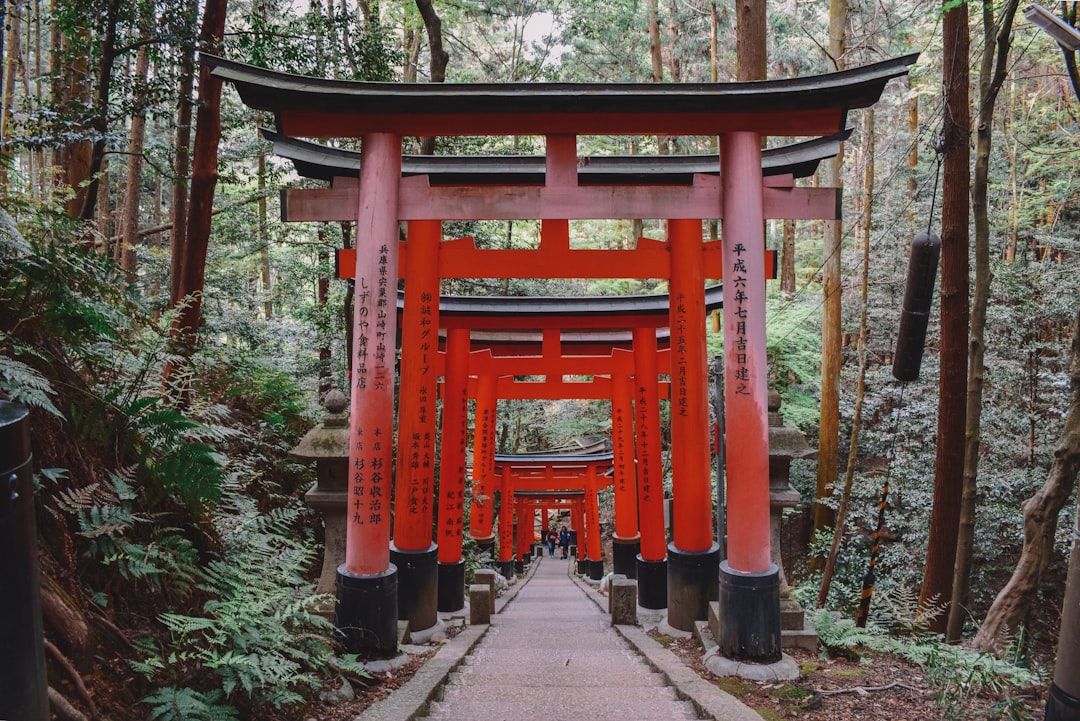
A torii marks the boundary between ordinary space and sacred space. Passing through one is not a ceremony, but it is not nothing either. The convention is to pause briefly before the gate, bow once, and walk through — preferably keeping to the sides of the path rather than the center, which is traditionally understood as the path of the deity.
The path leading from the torii to the main hall is called sando (参道). Its length and character vary dramatically: at Nikko Tosho-gu in Tochigi Prefecture, the sando runs through a forest of centuries-old cedar trees, the trunks massive and shadowed. At smaller neighborhood shrines, it may be a stone path twenty meters long. In both cases, the transition is intentional. You are meant to arrive.
One practical note. Not all torii are identical in meaning. The most common form — two upright pillars connected by a crossbeam — appears at Shinto shrines throughout Japan. But some shrines have multiple gates in sequence, such as the thousands of vermilion torii at Fushimi Inari Taisha, each donated by a business or individual as an offering. Walking through those tunnels of gates is a different experience from a single gateway, but the underlying idea is the same: threshold, attention, entry.
A note on temples vs. shrines
Shrines (jinja) are Shinto. Temples (tera or ji) are Buddhist. Japan has both, often in proximity to each other. The gate at a shrine is a torii; the gate at a temple is a sanmon or niomon. The hand-purification basin appears at both, but the prayer gesture differs. This article focuses on Shinto shrines specifically.
Hand Purification at the Temizuya
The stone basin near the entrance — called a temizuya (手水舎) — is where the visit formally begins.
The purification ritual using this basin is called temizu or chōzu. Water is drawn with a wooden ladle, and the sequence is: right hand, left hand, then (at some shrines) rinse the mouth with water cupped in the left hand, then tilt the ladle upright so water runs down and cleans the handle. The full sequence uses one ladle’s worth of water.
This gesture is not symbolic hygiene. It is a form of preparation, a deliberate act of setting aside the dust of the outside world before entering sacred space. The word harae — purification — is one of the central concepts in Shinto thought, and temizu is its everyday, accessible expression.
During the COVID-19 pandemic (roughly 2020 through 2022), many shrines suspended the temizuya as a public health measure, replacing it with hand sanitizer stations. As of 2026, most major shrines have restored the basins, though practice varies. If the basin is closed, a simple bow before entry is considered appropriate.
One thing I notice every time: people rush this step. They splash both hands perfunctorily and move on. Taking thirty seconds to do it slowly changes how you feel when you arrive at the main hall. The slowness is part of the function.
-
Step 1: Pick up the ladle with your right hand
Pour water over your left hand to rinse it.
-
Step 2: Transfer the ladle to your left hand
Pour water over your right hand.
-
Step 3: Transfer back to your right hand
Cup water in your left palm and bring it to your mouth (without touching the ladle to your lips). Rinse and release.
-
Step 4: Tilt the ladle upright
Let remaining water flow down the handle before replacing it at the basin.
At the Main Hall: The Gesture of niren nihakushu ichirei
The main hall — called haiden (拝殿), or sometimes honden (本殿) — is where the kami (deity) is understood to reside. At most shrines, visitors approach the haiden, make an offering, and perform the standard prayer sequence.
The offering box is called saisen-bako (賽銭箱). A coin is the typical offering. There is no required amount, and the gesture is more significant than the sum. The custom of offering coins dates to at least the Edo period (1603–1868), though offerings of rice and cloth were common before coins became widespread. Today, 5-yen coins are considered auspicious at some shrines because the word for 5 yen (go-en, 五円) is a homophone for “connection” — though this is a folk custom rather than formal doctrine.
After the offering, if a bell rope (suzu, 鈴) is present above the offering box, ring it once. The sound is understood to alert the kami to your presence and to drive away impurity.
Then the prayer sequence: two deep bows (niren), two sharp claps at chest height (nihakushu), hands held together, a moment of quiet for your own words or intentions, and a final bow (ichirei). This is niren nihakushu ichirei (二礼二拍手一礼), and it has been the recommended standard form of the Jinja Honcho (Association of Shinto Shrines) — the largest Shinto administrative body in Japan, overseeing approximately 80,000 shrines — since the postwar reorganization of shrine practice.
A few shrines use a slightly different form: Izumo Taisha in Shimane Prefecture, one of the oldest and most significant shrines in Japan, uses shiren shihakushu ichirei — four bows, four claps, one bow — because of its particular relationship to the deity Okuninushi no Mikoto. This is not an error or eccentricity; it reflects the shrine’s independent ritual lineage. When visiting a shrine for the first time, it is worth a brief check of local custom.
Key points of the prayer sequence
- Two deep bows before clapping (back roughly parallel to the ground)
- Two sharp hand claps at chest height, palms aligned — not cupped, not loud for the sake of volume
- A moment of stillness with hands pressed together for your own words
- One final bow before stepping back
- Izumo Taisha and a small number of other shrines use four bows and four claps — confirm locally
What Omamori and Ema Tell You About Living Tradition
A shrine visit often extends beyond the main hall.
Most shrines sell omamori (お守り), small cloth amulets containing a prayer or sacred text, sewn shut and worn or carried for protection. Categories are specific: traffic safety, academic success, health, safe childbirth, business prosperity. These are not souvenirs in the ordinary sense; they are understood to carry the kami’s protection for one year, after which they should be returned to the shrine for ritual disposal (oharai). Burning omamori in a household fire is not appropriate; the shrines hold dedicated ceremonies for this purpose, typically around the New Year.
Ema (絵馬) are small wooden votive plaques, originally donated as a proxy for the offering of a live horse — the word ema means “picture horse.” The practice of substituting a painted image for an actual horse dates to at least the 8th century, according to records at Nara-era institutions; the current small wooden format became widespread during the Edo period. Today, visitors write wishes or prayers on the blank side and hang them on a dedicated rack at the shrine. Walking past a rack of ema at a shrine near a university before entrance exam season is a particular kind of reading — the wishes are unguarded, specific, and completely human.
Ema design varies by shrine. Shrines connected to specific deities have characteristic imagery: shrines dedicated to Tenjin (the deified scholar Sugawara no Michizane, died 903 CE) often feature oxen or plum blossoms. Shrines to Inari feature foxes. These are not arbitrary; the imagery connects to the mythology surrounding each deity, and understanding even a fraction of it changes what you see when you look at the plaques.
One small observation worth recording. The most frequently visited shrines — those that appear in tourism rankings and attract large crowds — are often not the ones that leave the deepest impression. A small neighborhood shrine, visited on a weekday morning when no one else is there, offers something that a famous shrine on a holiday weekend cannot: quiet. The ritual is the same. The experience is not.
*This article is based on information as of 2026-05-24. Temple and shrine hours, as well as event schedules, may change. Please check the official websites before visiting.
Travel often rewards what unfolds in the moment more than what was planned. This article is for reference; please make your final decisions based on current conditions and the season.
The Ritual Holds More Than the Explanation Does
- The sequence of a shrine visit — torii, temizuya, haiden, niren nihakushu ichirei — is structured, learnable, and worth doing deliberately rather than imitating hastily.
- Each element has a history: temizu as purification, the saisen offering as connection, the clap as address, the bow as respect. Knowing the history does not make the gesture more authentic, but it makes it more present.
- Variation exists. Izumo Taisha uses four bows and four claps. Some shrines have modified temizuya practices. Local custom is worth confirming before arrival.
The gate is still easy to find. The ritual, now, is a little less opaque.
When the season turns and a new reason presents itself — hatsumode in January, the autumn festivals of October, a quiet afternoon with no occasion at all — the sequence will be there, waiting to be walked through again.
This article contains references to recommended products.
Photo by Dave Weatherall on Unsplash